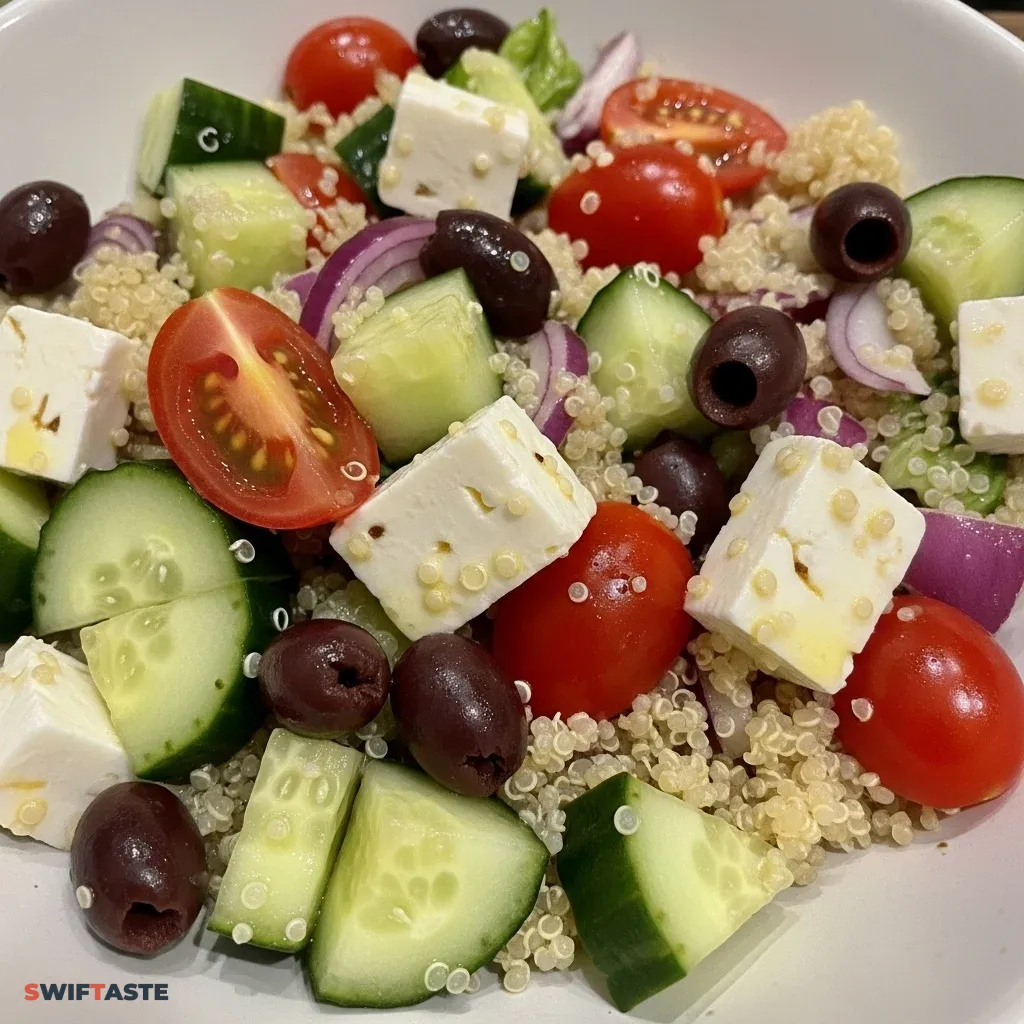
This Greek Salad with Quinoa and Feta offers a masterclass in balancing textures and contrasting flavor profiles. You get a satisfying crunch from fresh Persian cucumbers and the creamy, briny punch of high-quality sheep’s milk cheese. The addition of quinoa transforms a traditional Horiatiki into a protein-rich powerhouse that sustains your energy levels without feeling heavy.
From a culinary science perspective, the quinoa acts as a structural sponge, absorbing the acidic lemon vinaigrette while maintaining its distinct, nutty identity. This dish celebrates the Mediterranean diet through fresh, whole ingredients and precise seasoning. You will appreciate how the sharpness of red onions cuts through the rich fats of the olives and oil. Prepare your palate for a vibrant, refreshing meal that works perfectly for a sun-drenched lunch or a sophisticated side dish.
Why You’ll Love This Greek Salad with Quinoa and Feta
- Textural Harmony: The fluffy, light grains of quinoa perfectly complement the crisp vegetables and the soft, crumbly texture of authentic feta.
- Superior Satiety: High protein and fiber content ensure this Greek Salad with Quinoa and Feta keeps you full much longer than standard leafy greens.
- Complex Flavor Profile: You experience a sophisticated interplay between the saltiness of Kalamata olives, the sweetness of cherry tomatoes, and the herbal brightness of fresh oregano.
- Meal Prep Efficiency: Unlike lettuce-based salads that wilt quickly, the ingredients in this dish stay robust and flavorful for several days in the refrigerator.
Ingredients You’ll Need
To achieve the best results with your Greek Salad with Quinoa and Feta, prioritize the quality of your raw materials. Chemistry dictates that the flavor of a cold salad relies entirely on the quality of its components since heat does not mask imperfections. Choose a robust, cold-pressed Extra Virgin Olive Oil to ensure a rich mouthfeel and antioxidant benefits.
| Category | Ingredient | Chef’s Note |
|---|---|---|
| Base | White or Tri-color Quinoa | Rinse thoroughly to remove bitter saponins. |
| Vegetables | English or Persian Cucumbers | These varieties have thinner skins and fewer seeds. |
| Vegetables | Cherry or Grape Tomatoes | Halving them exposes more surface area for the dressing. |
| Vegetables | Red Onion | Soak in cold water to reduce the harsh sulfuric bite. |
| Brine | Kalamata Olives | Ensure they are pitted to protect your teeth and improve texture. |
| Dairy | Block Feta Cheese | Avoid pre-crumbled versions; they often contain anti-caking agents. |
| Dressing | Extra Virgin Olive Oil | Select an oil with a peppery finish for depth. |
| Dressing | Fresh Lemon Juice & Red Wine Vinegar | A dual-acid approach creates a more complex brightness. |
| Herbs | Dried Oregano & Fresh Parsley | Oregano provides the signature Greek aroma. |
Substitutions & Variations
Note: This video is for demonstration purposes and may use a slightly different method.
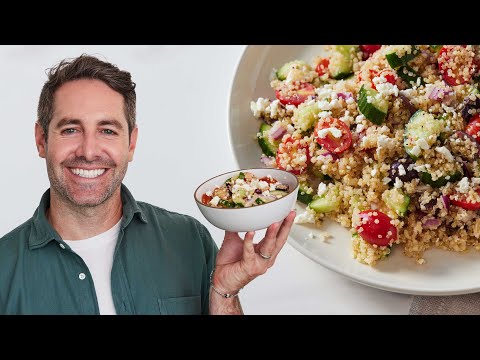
If you need to pivot based on what is in your pantry, you can still create a delicious Greek Salad with Quinoa and Feta. Science shows us that while the specific grain might change, the ratio of starch to acid remains the most critical factor for success. Consider these healthy swaps to customize your bowl.
- Alternative Grains: If you run out of quinoa, try cooked farro or pearl couscous. Farro offers a chewier texture and a nuttier flavor, though it contains gluten.
- Dairy-Free Options: For a vegan version, substitute the feta with marinated tofu cubes or a plant-based almond-based “feta” to maintain that necessary salty-creamy component.
- Vinegar Varieties: If red wine vinegar is unavailable, apple cider vinegar works well, though it adds a slightly fruitier undertone.
- Protein Additions: Boost the amino acid profile by adding chickpeas or grilled shrimp. These additions complement the Mediterranean flavor profile without clashing.
- Leafy Greens: Stir in a handful of baby spinach or chopped kale if you prefer more volume and a boost of Vitamin K.
If you’re interested in creating variations of your Greek Salad with Quinoa and Feta, consider exploring how to make a Creamy Greek Salad. This recipe provides unique twists and healthy swaps to elevate your salad experience.
Step-by-Step Instructions
Follow these steps to ensure your Greek Salad with Quinoa and Feta reaches its full potential. We will focus on proper grain hydration and vegetable preparation to maximize flavor absorption.
- Rinse and Toast the Quinoa: Place the raw quinoa in a fine-mesh sieve and rinse under cold water for 30 seconds. In a dry saucepan, toast the damp quinoa over medium heat for 2 minutes until it smells nutty. This Maillard reaction enhances the final flavor.
- Simmer the Base: Add water or vegetable broth to the saucepan using a 1:2 ratio (one part quinoa to two parts liquid). Bring to a boil, then reduce to a simmer. Cover the pot and cook for 15 minutes.
- The Steam Phase: Remove the pot from the heat and let it sit, covered, for 5 minutes. This allows the remaining moisture to distribute evenly through the grains via capillary action, preventing a mushy texture.
- Prepare the Aromatics: While the quinoa cools, dice your cucumbers, halve the tomatoes, and thinly slice the red onion. If the onion feels too pungent, soak the slices in ice water for 10 minutes to leach out some of the propanethial S-oxide.
- Emulsify the Dressing: In a small bowl, whisk together the olive oil, lemon juice, red wine vinegar, dried oregano, salt, and pepper. You want a stable emulsion where the oil and acid bind together to coat the Greek Salad with Quinoa and Feta perfectly.
- The Big Mix: In a large bowl, fluff the cooled quinoa with a fork. Add the chopped vegetables, Kalamata olives, and half of the crumbled feta. Pour the dressing over the top and toss gently.
- Final Garnish: Top the salad with the remaining feta and fresh parsley. This prevents the cheese from breaking down too much during the initial mixing process.
Pro Tips for Success
Achieving the perfect Greek Salad with Quinoa and Feta requires attention to detail. As a former test kitchen chef, I have analyzed why some salads fall flat while others sing. Here are the technical secrets you need to know.
- Control the Temperature: Never mix your dressing or fresh vegetables into hot quinoa. Heat will cause the cucumbers to lose their turgor pressure (crunch) and will make the herbs turn grey. Let the quinoa cool to room temperature or chill it slightly before assembly.
- Salt Management: Feta and olives carry a high sodium load. Taste your salad before adding extra salt to the dressing. You want to enhance the flavors, not overwhelm them with salinity.
- The “Bloom” Technique: Add your dried oregano to the vinegar first. The acid helps “bloom” the dried herb, releasing essential oils that would otherwise remain trapped in the dried leaf structure.
- Size Consistency: Chop your vegetables into uniform, bite-sized pieces roughly the size of a chickpea. This ensures that every forkful provides a balanced distribution of all ingredients.
- Acidity Balance: If your salad tastes dull, it likely needs more acid rather than more salt. A final squeeze of fresh lemon juice just before serving can brighten the entire dish instantaneously.
To master the techniques for a flawless Greek Salad with Quinoa and Feta, check out the Zesty Greek Salad guide. It offers crucial tips on preventing soggy veggies and enhancing flavor through temperature control.
Storage & Reheating Tips
The Greek Salad with Quinoa and Feta is an exceptional candidate for meal prep because the components are structurally sound. However, you must handle storage correctly to maintain the highest quality over several days.
Store the salad in an airtight glass container in the refrigerator. Glass is non-reactive and won’t absorb the odors of the onions or the acidity of the dressing. This salad stays fresh for 3 to 4 days.
Because quinoa absorbs moisture over time, you may find the salad slightly drier on day three. Simply toss it with a teaspoon of olive oil or a splash of lemon juice to revive the textures.
Do not reheat this dish. This is a cold salad intended to be eaten at refrigerated or room temperature. Heating the cucumbers and tomatoes will cause them to release excess water, resulting in a soggy mess and a loss of nutritional integrity. If the olive oil has solidified in the fridge, let the container sit on the counter for 10 minutes before eating.
What to Serve With This Recipe
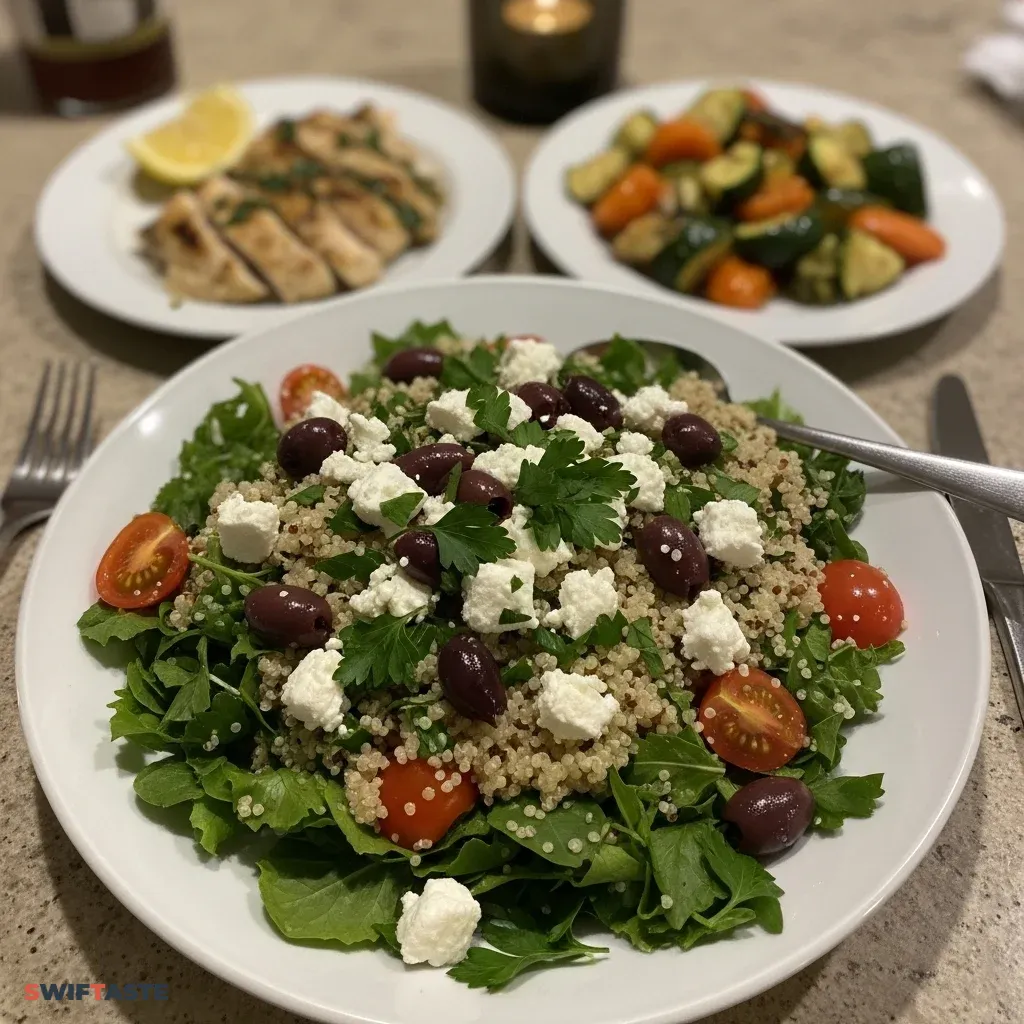
While this Greek Salad with Quinoa and Feta serves as a complete meal on its own, it also functions as a versatile side dish. Pairing it with the right proteins or complementary vegetables can elevate your dining experience.
- Grilled Lemon Herb Chicken: The lean protein of chicken breast seasoned with rosemary and garlic pairs beautifully with the Mediterranean notes.
- Roasted Mediterranean Vegetables: Serve alongside roasted zucchini, eggplant, and bell peppers for a high-fiber, plant-forward feast.
- Baked Cod or Sea Bass: The light, flaky texture of white fish provides a delicate contrast to the hearty quinoa.
- Hummus and Warm Pita: Create a mezze platter experience by adding a side of creamy chickpea puree and toasted whole-wheat pita bread.
- Tzatziki Sauce: A dollop of yogurt-based tzatziki adds extra moisture and a cooling element that balances the briny feta.
While enjoying your Greek Salad with Quinoa and Feta as a standalone meal, you might also want to explore pairing it with dishes like Greek Chicken Bowls for a balanced and fulfilling meal. This combination can take your culinary experience to the next level.
FAQs
Can I make Greek Salad with Quinoa and Feta ahead of time?
Yes, you can absolutely prepare this dish in advance. In fact, allowing the salad to marinate for 30 minutes to an hour before serving improves the flavor as the quinoa absorbs the dressing. For longer storage, keep the dressing in a separate jar and mix it in just before you plan to eat to keep the vegetables at their peak crispness.
Is quinoa healthier than pasta in a Greek salad?
From a nutritional standpoint, quinoa offers several advantages over traditional pasta. It is a complete protein, meaning it contains all nine essential amino acids that the body cannot produce on its own. Additionally, quinoa has a lower glycemic index, which leads to a slower, more stable rise in blood sugar compared to refined wheat pasta used in typical Greek Salad with Quinoa and Feta variations.
How do I stop my quinoa from being bitter?
The bitterness in quinoa comes from a natural coating called saponin, which acts as a defense mechanism for the plant. Even if the packaging says “pre-rinsed,” I always recommend rinsing it again at home. Use a fine-mesh strainer and run cold water over the grains while rubbing them with your hand. This mechanical action ensures you remove all traces of saponin, leaving you with a clean, nutty flavor profile.
Greek Salad, traditionally known as Horiatiki, is a versatile dish that highlights fresh vegetables and tangy feta cheese. Incorporating grains like quinoa not only enhances its nutritional profile but also adds a remarkable texture to this beloved Mediterranean classic, which emphasizes the importance of fresh ingredients in healthy eating.
Nutrition Information (per serving)
This Greek Salad with Quinoa and Feta provides a balanced macro profile suitable for a variety of dietary goals. The healthy fats from the olive oil support heart health, while the complex carbohydrates in the quinoa provide sustained energy. Note that the sodium content primarily comes from the feta and olives, so adjust those amounts if you are on a sodium-restricted diet.
| Nutrient | Amount |
|---|---|
| Calories | 345 kcal |
| Total Fat | 18g |
| Saturated Fat | 5g |
| Protein | 11g |
| Total Carbohydrates | 38g |
| Dietary Fiber | 6g |
| Sugars | 4g |
| Sodium | 480mg |
Mastering the Greek Salad with Quinoa and Feta is a gateway to understanding the fundamentals of Mediterranean cooking. You now understand how to manipulate grain texture, balance acidity, and choose ingredients based on their chemical and structural properties. This dish is more than just a meal; it is an example of how simple, high-quality ingredients can produce complex, satisfying results when you apply the right techniques. Enjoy your cooking journey and the vibrant flavors of this healthy staple.
Print
Greek Salad with Quinoa and Feta
- Total Time: 35 mins
- Yield: 4 servings 1x
- Diet: Gluten Free
Description
This Greek Salad with Quinoa and Feta offers a masterclass in balancing textures and contrasting flavor profiles. Enjoy a satisfying crunch from fresh Persian cucumbers and the creamy, briny punch of high-quality sheep’s milk cheese. The addition of quinoa transforms this dish into a protein-rich powerhouse, celebrating the Mediterranean diet through fresh, whole ingredients and precise seasoning.
Ingredients
1 cup White or Tri-color Quinoa
1 cup English or Persian Cucumbers, diced
1 cup Cherry or Grape Tomatoes, halved
1/2 cup Red Onion, thinly sliced
1/2 cup Kalamata Olives, pitted
1/2 cup Block Feta Cheese, crumbled
1/4 cup Extra Virgin Olive Oil
2 tbsp Fresh Lemon Juice
2 tbsp Red Wine Vinegar
1 tsp Dried Oregano
Salt to taste
Pepper to taste
1/4 cup Fresh Parsley, chopped
Instructions
- Rinse quinoa thoroughly under cold water and then toast it in a dry saucepan over medium heat for 2 minutes
- Add water or vegetable broth in a 1:2 ratio to the quinoa. Bring to a boil, then reduce to a simmer. Cover and cook for 15 minutes
- Remove from heat and let it sit, covered, for 5 minutes
- Prepare the vegetables by dicing cucumbers, halving tomatoes, and soaking onions in ice water if needed
- In a small bowl, whisk together olive oil, lemon juice, red wine vinegar, oregano, salt, and pepper to make the dressing
- In a large bowl, fluff the cooled quinoa with a fork. Add the vegetables, olives, and half of the feta. Pour the dressing over and toss gently
- Top with the remaining feta and fresh parsley before serving
Notes
Store in an airtight container in the refrigerator for up to 3-4 days.
Revive the salad with a splash of olive oil or lemon juice if it becomes dry.
- Prep Time: 20 mins
- Cook Time: 15 mins
- Category: Salad
- Method: Mixing
- Cuisine: Greek
Nutrition
- Serving Size: 1 bowl
- Calories: 345 kcal
- Sugar: 4g
- Sodium: 480mg
- Fat: 18g
- Saturated Fat: 5g
- Unsaturated Fat: 13g
- Trans Fat: 0g
- Carbohydrates: 38g
- Fiber: 6g
- Protein: 11g
- Cholesterol: 30mg