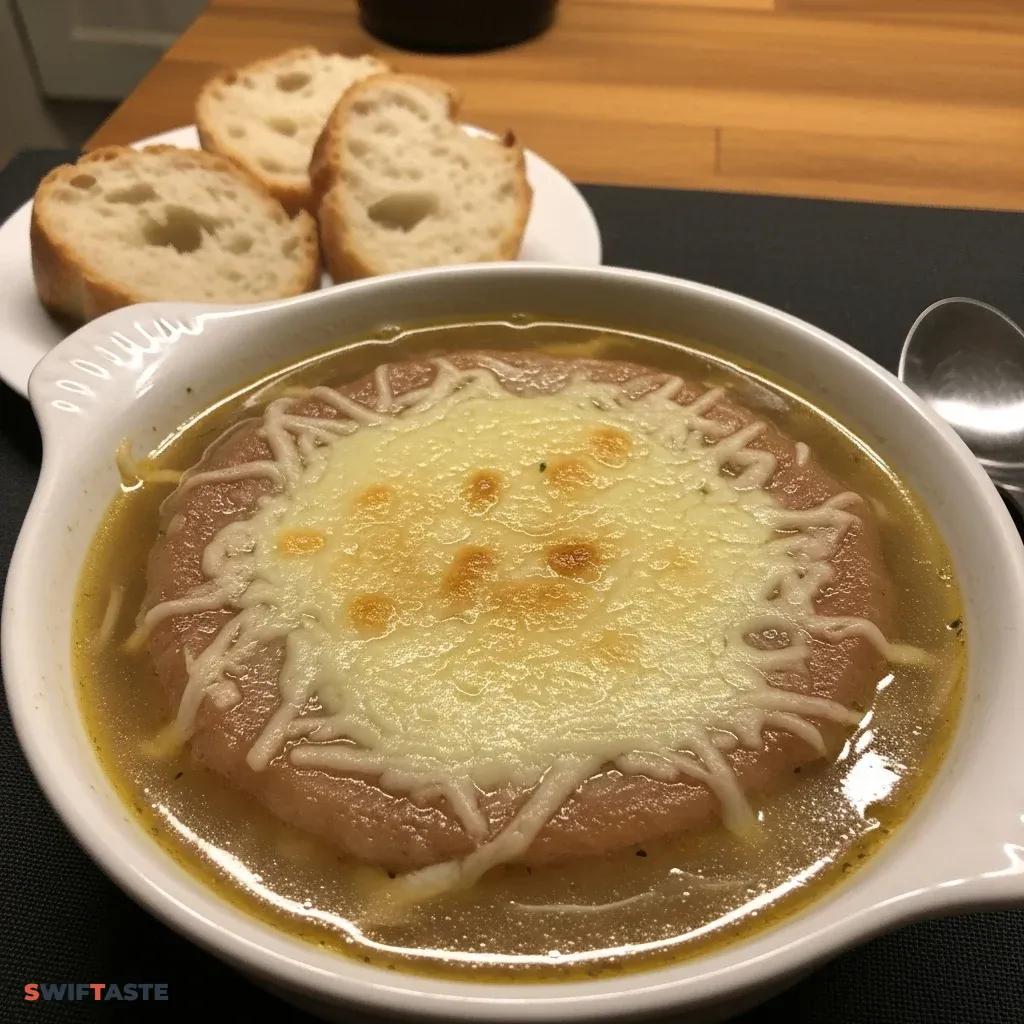
Mastering a French Onion Soup Classic requires a blend of patience and a fundamental understanding of sugar chemistry. Many home cooks rush the process, but the secret lies in the slow, enzymatic breakdown of onion cellular walls to unlock deep, umami-rich sweetness. This soup transforms humble, pungent alliums into a liquid gold topped with molten, nutty Gruyère cheese and crusty bread.
You will find that the contrast between the rich, dark broth and the vibrant, salty cheese creates a perfectly balanced sensory experience. As a former test kitchen chef, I can tell you that the magic happens during the Maillard reaction, where proteins and sugars interact under heat to create hundreds of new flavor compounds.
By following this guide, you will learn exactly how to control that heat to create the ultimate French Onion Soup Classic. Get ready to elevate your culinary skills with a dish that defines comfort and technical precision.
Why You’ll Love This French Onion Soup Classic
- Depth of Flavor: The slow caramelization process creates a complex profile that balances sweetness, salt, and acidity perfectly.
- Nutrient Dense: Onions are packed with quercetin and antioxidants, making this a surprisingly healthy way to support your immune system.
- Technique Builder: This recipe teaches you the essential skill of deglazing and temperature management, which applies to almost every savory dish you will ever make.
- Crowd Pleaser: It offers a high-end restaurant experience at home using very affordable, everyday ingredients.
Ingredients You’ll Need
In my years in the test kitchen, I learned that the quality of your base ingredients determines the ceiling of your final dish. For a French Onion Soup Classic, the specific type of onion and the quality of the stock are non-negotiable for success.
- Yellow Onions: Use about 3 to 4 pounds. Yellow onions contain the ideal balance of sugar and sulfur, which provides a deep, savory sweetness when cooked down.
- Unsalted Butter: This provides the fat needed for heat transfer. Using unsalted butter allows you to control the sodium levels precisely as the soup reduces.
- Beef Bone Broth: Look for a high-quality broth with high gelatin content. This adds body and a “velvety” mouthfeel to your French Onion Soup Classic.
- Dry Sherry or White Wine: Alcohol acts as a solvent, pulling out flavor compounds that are not water-soluble, adding a necessary layer of brightness.
- Fresh Thyme and Bay Leaves: These aromatics provide earthy notes that balance the heavy sweetness of the caramelized onions.
- Baguette: A day-old baguette works best because its lower moisture content allows it to soak up the broth without disintegrating.
- Gruyère Cheese: This Swiss cheese is the gold standard for melting. It has a high fat-to-protein ratio, ensuring a smooth, gooey pull.
- Kosher Salt and Black Pepper: Essential for layering seasoning at every stage of the cooking process.
Substitutions & Variations
Note: This video is for demonstration purposes and may use a slightly different method.

While the French Onion Soup Classic is iconic, you can make healthy adjustments without sacrificing the soul of the dish. Modern cooking often requires flexibility for dietary needs.
- Lower Sodium: Replace standard beef broth with a low-sodium vegetable or mushroom broth to reduce salt intake while keeping the umami profile high.
- Gluten-Free: Use a high-quality gluten-free baguette or even thick slices of roasted sweet potato as the “crouton” to support the cheese.
- Dairy-Free: Swap the butter for extra virgin olive oil and use a cashew-based vegan mozzarella. Olive oil contains heart-healthy monounsaturated fats.
- Onion Mix: While yellow onions are traditional, adding one or two red onions can introduce a subtle peppery note and a deeper color to the broth.
While the French Onion Soup Classic is iconic, you can make healthy adjustments without sacrificing the soul of the dish. For those looking to switch it up, consider trying a Peppered Onion Soup, which offers a unique twist on the traditional flavors.
Step-by-Step Instructions
Success with a French Onion Soup Classic is all about timing and visual cues. Follow these steps to ensure you don’t burn the sugars or leave the onions under-developed.
- Prep the Onions: Peel and slice your onions from pole to pole (root to stem) rather than into rings. This prevents the onions from turning into a mushy texture and helps them maintain some structural integrity during the long simmer.
- Begin the Caramelization: Melt your butter in a heavy-bottomed Dutch oven over medium heat. Add the onions and a pinch of salt. The salt draws out moisture through osmosis, which speeds up the initial softening phase of the French Onion Soup Classic.
- The Long Wait: Reduce the heat to medium-low. Cook the onions for 45 to 60 minutes, stirring every 5 to 10 minutes. You are looking for a deep mahogany color. If the bottom of the pan gets too dark too quickly, add a tablespoon of water to scrape up the fond.
- Deglaze the Pan: Once the onions are dark brown and jam-like, pour in the sherry or wine. Use a wooden spoon to scrape up all the browned bits (the fond) from the bottom of the pot. This is where the concentrated flavor of your French Onion Soup Classic lives.
- Simmer with Aromatics: Add the beef broth, fresh thyme, and bay leaves. Bring to a boil, then reduce to a simmer. Let the flavors meld for at least 30 minutes. This allows the liquid to reduce slightly, intensifying the savory notes.
- Prepare the Toasts: While the soup simmers, slice your baguette and toast the rounds in a 350°F oven until they are completely dry and crisp. This “staling” process is vital so they don’t turn into soggy mush in the French Onion Soup Classic.
- The Final Broil: Ladle the soup into oven-safe crocks. Place a toasted bread round on top and cover it generously with grated Gruyère. Place under the broiler for 2 to 4 minutes until the cheese is bubbling and spotted with brown.
Pro Tips for Success
To truly master the French Onion Soup Classic, you need to think like a scientist. These technical tips will bridge the gap between a good soup and a legendary one.
- Use a Heavy Pot: A cast-iron Dutch oven is best. Its high thermal mass ensures even heat distribution, preventing “hot spots” that can cause the onions to scorch rather than caramelize.
- The Baking Soda Trick: If you are short on time, add a tiny pinch (1/8 teaspoon) of baking soda to the onions. This raises the pH level, which accelerates the Maillard reaction and helps the onions brown faster.
- Layer Your Salt: Don’t wait until the end to season. Season the onions early to draw out water, and season the broth halfway through. This creates a more integrated flavor profile.
- Temperature Control: If you see the onions getting “fuzzy” or sticking too much, your heat is too high. True caramelization for a French Onion Soup Classic happens at a steady, low temperature.
- Quality of Sherry: Never use “cooking wine” from the grocery store aisle. It contains excessive salt. Use a dry sherry or a decent Pinot Grigio that you would actually enjoy drinking.
To truly master the French Onion Soup Classic, you need to think like a scientist. Incorporating technical tips like those found in our Honey Chicken Thighs Plate can help bridge the gap between a good soup and a legendary one.
Storage & Reheating Tips
The French Onion Soup Classic actually tastes better the next day because the sulfur compounds continue to mellow and the flavors fully marry in the refrigerator.
- Refrigeration: Store the soup base (without the bread and cheese) in an airtight container for up to 4 days. The fat may solidify on top; simply stir it back in during reheating.
- Freezing: This soup freezes beautifully. Freeze the liquid base in freezer-safe bags for up to 3 months. Thaw overnight in the fridge before reheating on the stove.
- Reheating: Always reheat the soup on the stovetop over medium heat until simmering. Only add the bread and cheese and broil right before you plan to serve it to maintain the texture.
What to Serve With This Recipe
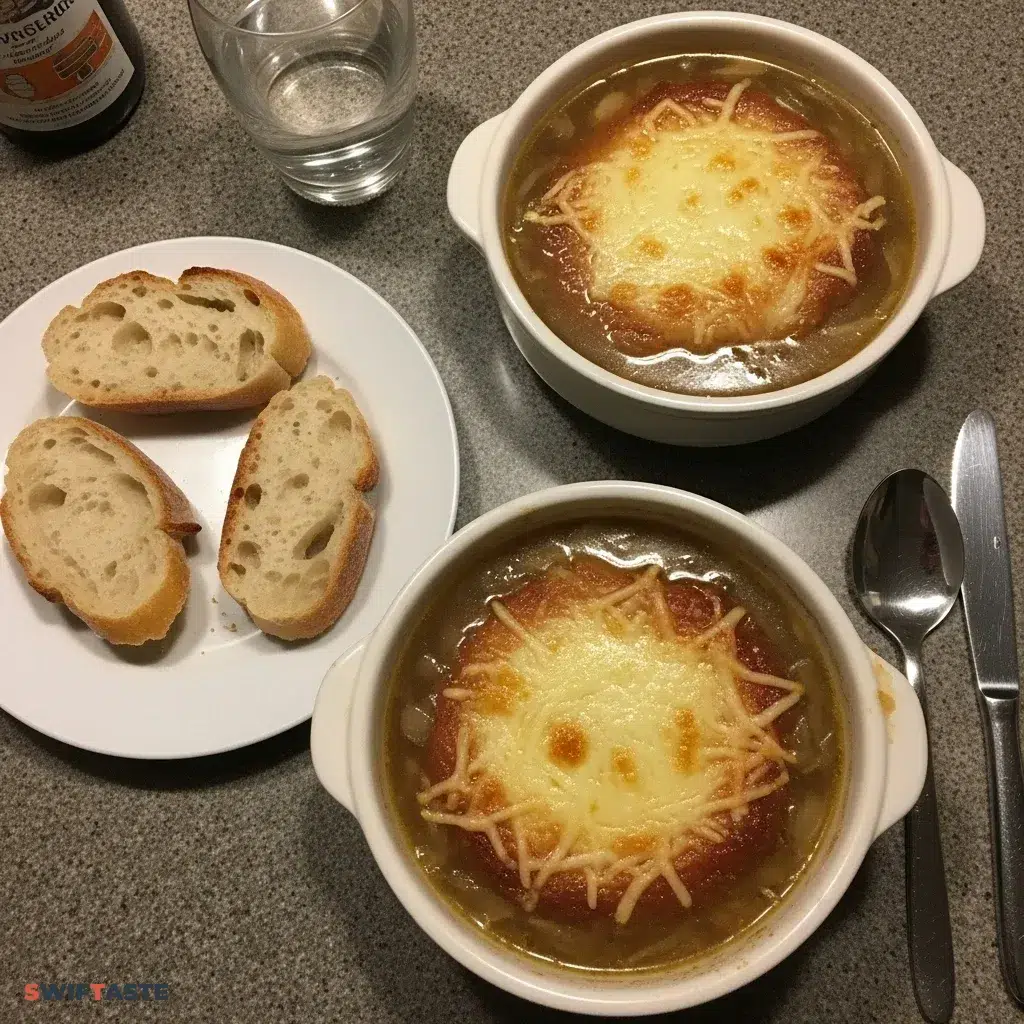
Since the French Onion Soup Classic is quite rich and salty, you want to pair it with sides that offer acidity, crunch, and freshness to cleanse the palate.
- Arugula Salad: The bitterness of arugula paired with a lemon vinaigrette cuts through the fatty cheese and sweet onions perfectly.
- Roasted Asparagus: A simple side of roasted asparagus with a sprinkle of lemon zest provides a healthy, fibrous contrast to the soup.
- Steamed Green Beans: Lightly blanched green beans with toasted almonds add a necessary crunch and vibrance to the meal.
- Dry Rosé or Crisp White Wine: If you are serving alcohol, a wine with high acidity will balance the richness of the Gruyère.
Since the French Onion Soup Classic is quite rich and salty, pairing it with sides that offer acidity and freshness can balance the flavors. Consider adding an accompanying Cinnamon Brioche Loaf to enhance your dining experience.
FAQs
Why are my onions taking so long to turn brown?
Caramelization is a slow chemical process. If your onions are still pale after 20 minutes, your heat might be too low, or you may have overcrowded the pan. Ensure you are using enough butter to coat the onions, which helps conduct the heat. Patience is the most important ingredient in a French Onion Soup Classic.
Can I make this recipe vegetarian?
Yes, you can certainly make a vegetarian version of the French Onion Soup Classic. Use a high-quality mushroom broth instead of beef broth. Mushrooms provide the necessary umami and “meaty” depth that characterizes this soup. You can also add a teaspoon of soy sauce or Worcestershire sauce (ensure it is the vegetarian version) for extra depth.
What is the best cheese if I can’t find Gruyère?
If Gruyère is unavailable, the best substitutes are Comté, Emmental, or a high-quality Swiss cheese. You want a cheese with good melting properties and a slightly nutty flavor. In a pinch, a sharp white cheddar can work for a French Onion Soup Classic, though it will have a more oily melt and a sharper bite.
French Onion Soup Classic is a widely celebrated dish that features caramelized onions in a savory broth, often topped with melted cheese and crusty bread. This classic French recipe represents the essence of comfort food, celebrated for its rich flavors and warm, hearty texture. To explore further, check out this informative link.
Nutrition Information (per serving)
This nutritional summary reflects one serving of the French Onion Soup Classic, including one slice of baguette and two ounces of cheese. Note that the fiber content comes primarily from the large volume of onions used.
| Nutrient | Amount per Serving |
|---|---|
| Calories | 380 kcal |
| Total Fat | 22g |
| Saturated Fat | 13g |
| Cholesterol | 65mg |
| Sodium | 850mg |
| Total Carbohydrates | 28g |
| Dietary Fiber | 4g |
| Sugars | 9g |
| Protein | 18g |

French Onion Soup Classic
- Total Time: 110 mins
- Yield: 4 servings 1x
- Diet: Gluten Free
Description
French Onion Soup Classic is a comforting dish made from caramelized onions, beef broth, and topped with Gruyère cheese and toasted bread. This soup balances sweetness, salt, and acidity, elevating humble onions to a gourmet experience.
Ingredients
4 lb Yellow Onions
4 tbsp Unsalted Butter
8 cups Beef Bone Broth
1/2 cup Dry Sherry
2 sprigs Fresh Thyme
2 Bay Leaves
1 Baguette
8 oz Gruyère Cheese
Kosher Salt to taste
Black Pepper to taste
Instructions
- Prep the Onions: Peel and slice the onions from root to stem
- Begin the Caramelization: Melt butter in a Dutch oven, add onions and salt
- The Long Wait: Cook onions on medium-low for 45 to 60 minutes until deep mahogany
- Deglaze the Pan: Add sherry or wine, scraping up the browned bits
- Simmer with Aromatics: Add broth, thyme, and bay leaves, simmer for at least 30 minutes
- Prepare the Toasts: Slice and toast baguette rounds in a 350°F ove
- The Final Broil: Ladle soup into crocks, top with toasted bread and cheese, and broil until bubbly
Notes
Quality of stock is crucial for the depth of flavor.
A heavy pot ensures even caramelization.
- Prep Time: 20 mins
- Cook Time: 90 mins
- Category: Dinner
- Method: Baking
- Cuisine: French
Nutrition
- Serving Size: 1 bowl
- Calories: 380 kcal
- Sugar: 9g
- Sodium: 850mg
- Fat: 22g
- Saturated Fat: 13g
- Unsaturated Fat: 9g
- Trans Fat: 0g
- Carbohydrates: 28g
- Fiber: 4g
- Protein: 18g
- Cholesterol: 65mg