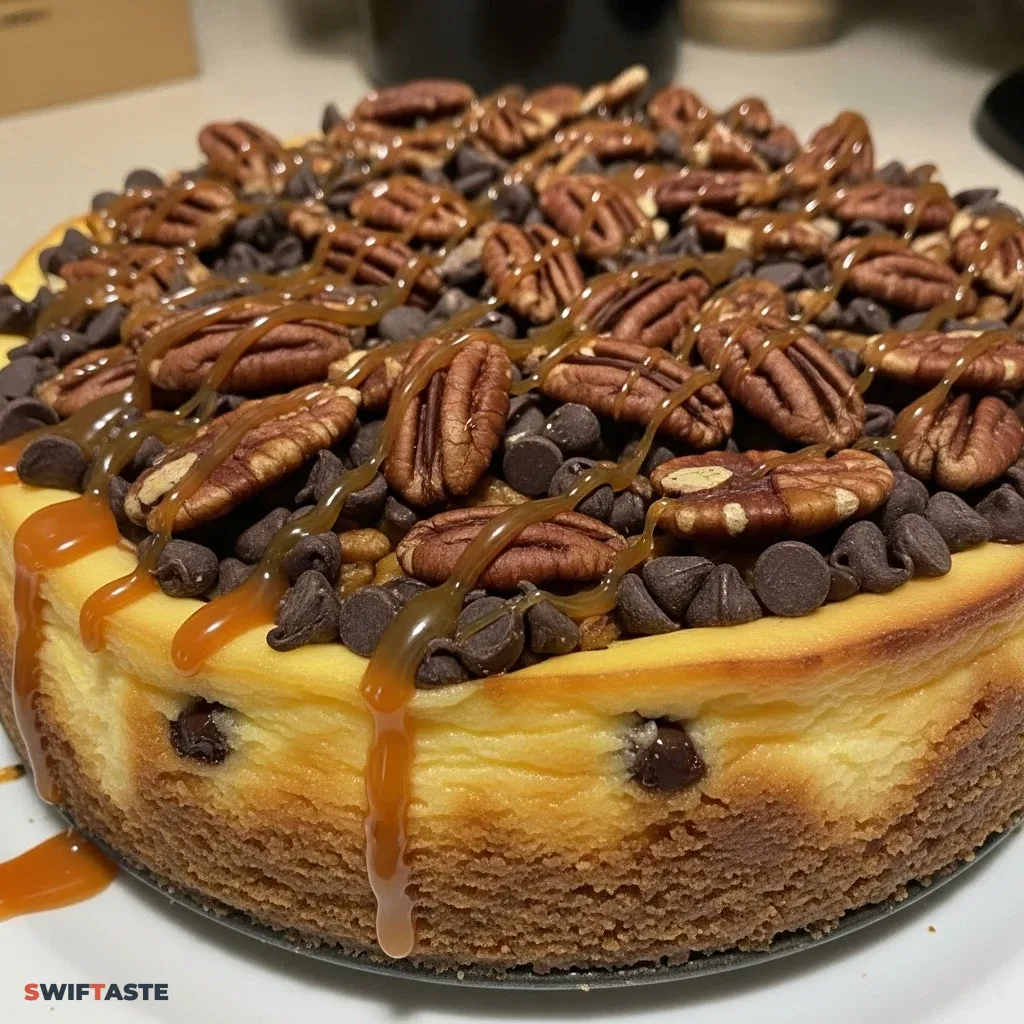
This Cheesecake Turtle with Caramel and Chocolate represents the pinnacle of dessert engineering. It combines the dense, creamy texture of a classic New York-style cheesecake with the crunch of toasted pecans and the richness of gooey caramel. As a former test kitchen chef, I find the science behind this specific flavor profile fascinating.
The salt in the caramel enhances the sweetness, while the fats in the chocolate provide a smooth mouthfeel. You will find that balancing these elements creates a complex flavor profile that satisfies every corner of your palate. Mastering this Cheesecake Turtle with Caramel and Chocolate requires patience and an understanding of how proteins and fats interact under heat.
This recipe ensures a crack-free finish and a velvety interior that will impress even the most discerning dessert critics. Prepare your kitchen for a truly transformative baking experience.
Why You’ll Love This Cheesecake Turtle with Caramel and Chocolate
- Perfect Textural Contrast: The crunch of the pecans offsets the silkiness of the cheese filling for a satisfying bite.
- Reliable Scientific Method: This recipe uses a low-and-slow baking approach to prevent the egg proteins from tightening and cracking.
- Balanced Flavor Profile: The bitterness of dark chocolate cuts through the heavy sugar in the caramel for a sophisticated finish.
- Crowd-Pleasing Aesthetics: The iconic “turtle” topping provides a professional, bakery-quality look that requires minimal decorating skill.
I believe that understanding the “why” behind your ingredients makes you a superior baker. In this Cheesecake Turtle with Caramel and Chocolate, every component serves a structural or chemical purpose. For example, the fat content in the cream cheese provides the necessary viscosity to hold the air bubbles we incorporate during mixing.
If you use low-fat alternatives, the protein structure becomes too rigid, resulting in a rubbery texture. Furthermore, the sugar does more than just sweeten; it acts as a tenderizer by interfering with the coagulation of egg proteins. This results in a softer, more delicate crumb. When you assemble your Cheesecake Turtle with Caramel and Chocolate, you are essentially building a stable emulsion of water, fat, and air.
Ingredients You’ll Need
Quality ingredients are the foundation of any successful Cheesecake Turtle with Caramel and Chocolate. Always choose full-fat brick cream cheese for the best stability. Ensure your eggs are at room temperature to facilitate better emulsification.
Use heavy cream with a high milk fat percentage to ensure the caramel doesn’t break or become grainy. Below is the precise list of components required for your masterpiece.
| Category | Ingredient | Quantity |
| Crust | Graham Cracker Crumbs | 2 Cups |
| Crust | Unsalted Butter (Melted) | 1/2 Cup |
| Filling | Full-Fat Cream Cheese (Room Temp) | 32 oz |
| Filling | Granulated Sugar | 1 1/4 Cups |
| Filling | Large Eggs | 4 Units |
| Filling | Sour Cream | 1 Cup |
| Topping | Pecan Halves (Toasted) | 1 Cup |
| Topping | Semi-Sweet Chocolate Chips | 1/2 Cup |
| Topping | Caramel Sauce | 1/2 Cup |
When selecting your chocolate for the Cheesecake Turtle with Caramel and Chocolate, look for a brand with a high cocoa butter content. This ensures the chocolate melts smoothly and maintains a glossy sheen. The pecans also play a vital role; toasting them triggers the Maillard reaction, which develops deep, nutty aromas that raw pecans simply cannot match. Additionally, using unsalted butter allows you to control the sodium levels in the crust, ensuring it doesn’t overshadow the delicate cheesecake base.
Substitutions & Variations
Note: This video is for demonstration purposes and may use a slightly different method.
While I always recommend following the scientific ratios of the original Cheesecake Turtle with Caramel and Chocolate, you may want to explore some healthier or alternative options. These swaps maintain the structural integrity of the dessert while shifting the nutritional profile. However, remember that fat provides the primary flavor carrier in this dish, so proceed with caution when reducing it.
- Almond Flour Crust: Replace graham crackers with almond flour for a gluten-free and lower-carb alternative. This adds a boost of healthy fats and vitamin E.
- Greek Yogurt: Swap the sour cream for plain, full-fat Greek yogurt. This increases the protein content while maintaining the necessary acidity for the cheesecake’s tang.
- Dark Chocolate: Use 70% or higher dark chocolate for the drizzle. The antioxidants in dark chocolate offer cardiovascular benefits and a less sugary finish for your Cheesecake Turtle with Caramel and Chocolate.
- Natural Sweeteners: You can experiment with maple syrup in the caramel sauce for a more natural sugar source, though the texture will be slightly thinner.
If you choose to use a gluten-free crust for your Cheesecake Turtle with Caramel and Chocolate, I recommend adding a tablespoon of flaxseed meal to help bind the crumbs. Without gluten or the starches in graham crackers, the crust can become crumbly.
Furthermore, if you are looking to reduce the overall calorie count, you can use a stevia-based sugar replacement for the filling. Just be aware that sugar replacements do not provide the same tenderizing effects on egg proteins, so your cheesecake might feel slightly firmer.
While you enjoy the rich Cheesecake Turtle with Caramel and Chocolate, consider exploring the recipe for a Velvety Cheesecake Dish. This option allows you to experiment with healthier ingredients without sacrificing flavor, making it a great complement to your dessert repertoire.
Step-by-Step Instructions
- Preheat and Prepare: Heat your oven to 325°F (163°C). Wrap the outside of a 9-inch springform pan tightly with several layers of heavy-duty aluminum foil. This step is critical for the Cheesecake Turtle with Caramel and Chocolate to protect it from the water bath.
- Construct the Crust: Combine graham cracker crumbs and melted butter in a medium bowl. Press the mixture firmly into the bottom of the prepared pan. Bake for 10 minutes to set the structure, then let it cool completely.
- Cream the Cheese: In a large mixing bowl, beat the room-temperature cream cheese and sugar until perfectly smooth. Use a medium speed to avoid incorporating too much air. Excess air leads to bubbles that can cause the Cheesecake Turtle with Caramel and Chocolate to rise and then collapse.
- Incorporate the Eggs: Add the eggs one at a time, mixing just until combined. This careful process prevents overworking the proteins. Stir in the sour cream and vanilla extract at the very end.
- Bake in a Water Bath: Pour the batter over the cooled crust. Place the springform pan into a larger roasting pan and fill the roasting pan with hot water halfway up the sides of the cheesecake pan. Bake for 60 to 70 minutes. The center of your Cheesecake Turtle with Caramel and Chocolate should still have a slight jiggle.
- Controlled Cooling: Turn off the oven and crack the door slightly. Let the cheesecake sit inside for one hour. This gradual temperature drop prevents the surface from cracking due to thermal shock.
- Chill Thoroughly: Remove the cheesecake from the water bath and refrigerate for at least 6 hours, preferably overnight. Cold temperatures allow the fat molecules to solidify, creating a clean slice.
- Add the Toppings: Once chilled, remove the Cheesecake Turtle with Caramel and Chocolate from the pan. Arrange the toasted pecans on top. Drizzle with warm caramel sauce and melted chocolate.
The water bath method, or bain-marie, is the secret weapon for a perfect Cheesecake Turtle with Caramel and Chocolate. By surrounding the pan with water, you ensure the temperature never exceeds 212°F (100°C). This gentle heat allows the eggs to set into a creamy custard rather than a rubbery mess.
If you skip this step, the edges of the cheesecake will overcook and pull away from the pan before the center is done. Consequently, you will end up with a sunken middle and a dry texture. Precision in the cooling phase is just as important as the baking phase.
Pro Tips for Success
To achieve a professional-grade Cheesecake Turtle with Caramel and Chocolate, you must pay attention to the small details. First, always use room-temperature ingredients. Cold cream cheese will result in lumps that are impossible to remove once you add the eggs.
If you forget to take your ingredients out early, you can soak the eggs in warm water for five minutes and microwave the cream cheese in 10-second intervals. Additionally, avoid over-beating the batter once you add the eggs. Eggs are excellent at trapping air, and while air is good for cakes, it is the enemy of a dense Cheesecake Turtle with Caramel and Chocolate.
Another technical tip involves the caramel sauce. If you are making your own caramel, do not stir the sugar while it melts. Stirring can cause the sugar to crystallize, resulting in a gritty sauce.
Instead, gently swirl the pan. Once the sugar reaches a deep amber color, whisk in the heavy cream and butter carefully. The temperature difference will cause the mixture to steam and bubble violently, which is a normal part of the process.
This homemade touch significantly elevates the overall quality of your Cheesecake Turtle with Caramel and Chocolate. Finally, use a warm, wet knife to slice the cheesecake for perfectly clean edges.
For achieving the ultimate in cheesecake perfection, you can also check out our Silky Cheesecake Dish recipe. It highlights the importance of ingredient temperature and preparation techniques that will elevate your baking skills.
Storage & Reheating Tips
Proper storage is essential to maintain the moisture levels of your Cheesecake Turtle with Caramel and Chocolate. Always keep the cheesecake in an airtight container in the refrigerator. The dairy components are highly susceptible to absorbing odors from other foods, so a tight seal is mandatory.
It will stay fresh for up to five days. If you find the caramel topping has hardened too much, let the slice sit at room temperature for 20 minutes before serving. This allows the fats to soften and the flavors to become more pronounced.
You can also freeze the Cheesecake Turtle with Caramel and Chocolate for longer storage. I recommend freezing the cheesecake without the caramel and chocolate toppings for the best results, as the sauces can become messy during thawing. Wrap individual slices in plastic wrap and then a layer of aluminum foil.
They will last for up to three months in the freezer. To thaw, place the slice in the refrigerator overnight. Avoid using a microwave to thaw your Cheesecake Turtle with Caramel and Chocolate, as the rapid heat will cause the delicate fat-protein matrix to break, leading to a watery and unappealing texture.
What to Serve With This Recipe
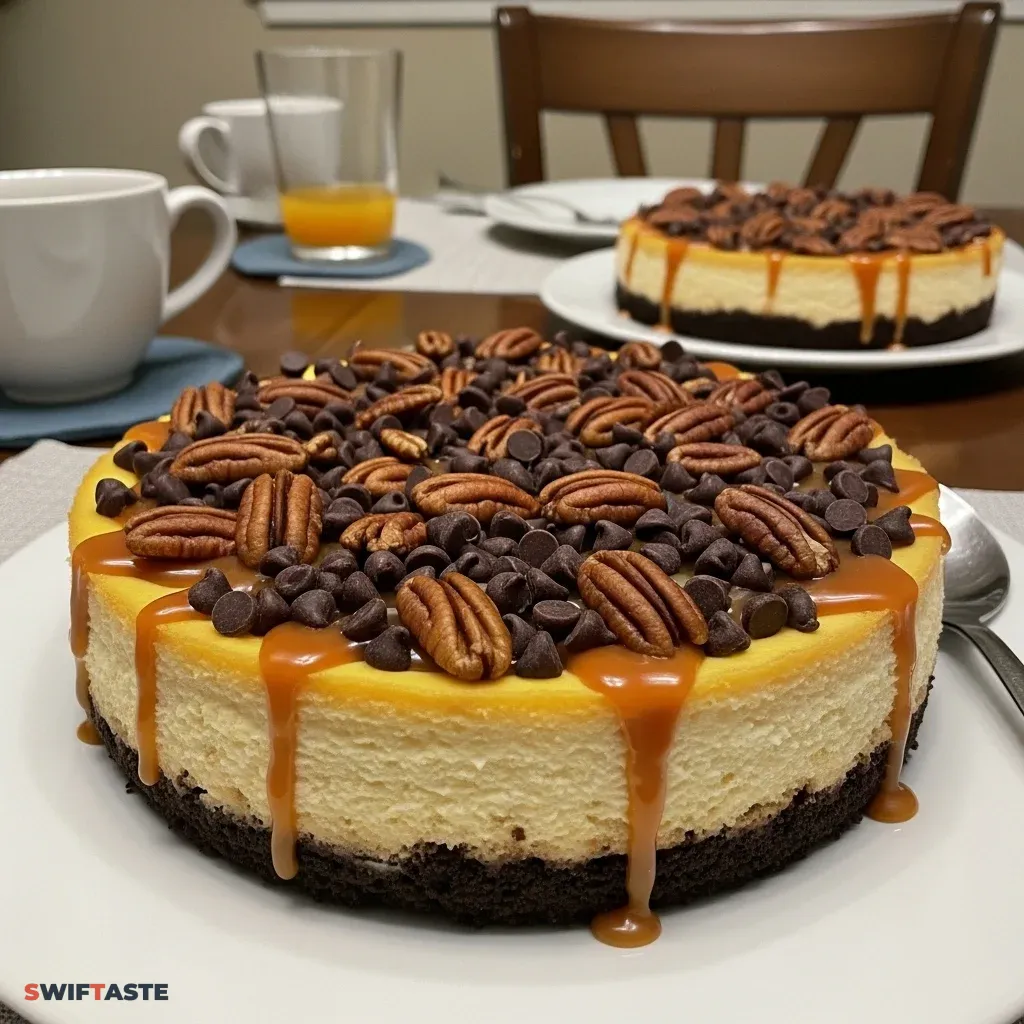
Because the Cheesecake Turtle with Caramel and Chocolate is incredibly rich and calorie-dense, you should pair it with lighter, nutrient-dense sides to balance the meal. Acidic or slightly bitter accompaniments work best to cleanse the palate between bites of the decadent filling. A fresh fruit salad featuring raspberries and blackberries provides a sharp acidity that cuts through the heavy cream cheese. Additionally, a light green salad with a citrus vinaigrette can serve as a refreshing starter before the main event.
- Fresh Berries: Strawberries and raspberries offer Vitamin C and fiber, providing a tart contrast to the sweet caramel.
- Roasted Asparagus: A side of lightly seasoned roasted vegetables provides a savory balance to a rich dessert-heavy meal.
- Black Coffee or Espresso: The bitterness of high-quality coffee beans complements the dark chocolate and helps aid digestion.
- Sparkling Water with Lemon: Carbonation and citrus help refresh the tongue, making every bite of Cheesecake Turtle with Caramel and Chocolate feel like the first one.
Furthermore, if you are serving this at a dinner party, consider the order of flavors. Avoid serving heavy, cream-based pasta dishes before the Cheesecake Turtle with Caramel and Chocolate. Instead, opt for grilled salmon or roasted chicken with steamed broccoli.
These lighter proteins ensure that your guests still have the appetite to appreciate the complex science and deep flavors of your turtle-inspired creation. Balancing the macros of your entire meal makes the indulgence of the cheesecake much more enjoyable.
To balance the richness of the Cheesecake Turtle, try our Pumpkin Swirl Cheesecake Recipe. This lighter dessert can enhance your meal and provide a refreshing contrast to the decadence of your main cheesecake.
FAQs
Why did my Cheesecake Turtle with Caramel and Chocolate crack on top?
Cracks usually happen because of thermal shock or over-beating the eggs. When you beat too much air into the batter, the cheesecake rises like a souffle in the oven and then collapses as it cools. Furthermore, if you cool the Cheesecake Turtle with Caramel and Chocolate too quickly, the surface tension breaks, resulting in a crack. Using a water bath and letting the cheesecake cool in the oven with the door cracked are the best ways to prevent this issue.
Can I use low-fat cream cheese for this recipe?
I strongly advise against using low-fat or “neat” cream cheese for a Cheesecake Turtle with Caramel and Chocolate. Low-fat versions contain more water and fillers like gums or starches. These ingredients alter the coagulation point of the proteins and result in a grainy, less stable texture. For the creamy mouthfeel that defines a turtle cheesecake, the high fat content of standard brick cream cheese is non-negotiable.
How do I know when the cheesecake is finished baking?
The “jiggle test” is the most reliable scientific indicator. When you gently shake the pan, the edges of the Cheesecake Turtle with Caramel and Chocolate should be set and firm, but a 2-inch circle in the very center should still wobble slightly, like Jell-O.
The residual heat will continue to cook the center as it cools. If the center is firm while still in the oven, you have likely overcooked it, which may lead to a dry texture and potential cracking.
The Cheesecake Turtle with Caramel and Chocolate is a delightful dessert that combines rich cream cheese filling, crunchy toppings, and luscious caramel. This dish showcases the balance of flavors and textures that is essential in many renowned desserts, making it a popular choice among dessert lovers and bakers alike; for more about the art of cheesecake, you can read about it in this article.
Nutrition Information (per serving)
This Cheesecake Turtle with Caramel and Chocolate is an indulgent treat meant to be enjoyed in moderation. Below is a summary of the estimated macronutrients per slice, based on a 12-serving yield. Keep in mind that the homemade caramel and chocolate drizzle contribute significantly to the sugar and fat counts. However, the pecans provide a small amount of healthy monounsaturated fats and fiber.
| Nutrient | Amount per Serving |
| Calories | 580 kcal |
| Total Fat | 42g |
| Saturated Fat | 24g |
| Cholesterol | 145mg |
| Sodium | 310mg |
| Total Carbohydrates | 48g |
| Dietary Fiber | 2g |
| Sugars | 36g |
| Protein | 8g |
While the calorie count is high, you can feel good about the 8 grams of protein per serving in your Cheesecake Turtle with Caramel and Chocolate. This protein comes primarily from the eggs and the cream cheese. To fit this into a balanced diet, consider sharing a slice or saving it for a special occasion.
Understanding the caloric density of your food is a key part of food science and healthy living. Enjoy your baking journey and the delicious results of your scientific precision!
Print
Cheesecake Turtle with Caramel and Chocolate
- Total Time: 6 hrs 40 mins
- Yield: 12 servings 1x
- Diet: Gluten Free
Description
This Cheesecake Turtle with Caramel and Chocolate combines a creamy cheesecake with rich caramel and chocolate, balancing flavors and textures for a delightful dessert experience.
Ingredients
2 cups Graham Cracker Crumbs
1/2 cup Unsalted Butter (Melted)
32 oz Full-Fat Cream Cheese (Room Temp)
1 1/4 cups Granulated Sugar
4 Units Large Eggs
1 cup Sour Cream
1 cup Pecan Halves (Toasted)
1/2 cup Semi-Sweet Chocolate Chips
1/2 cup Caramel Sauce
Instructions
- Preheat your oven to 325°F (163°C) and prepare a 9-inch springform pan with foil
- Combine graham cracker crumbs with melted butter and press into the bottom of the pan, baking for 10 minutes
- Beat cream cheese and sugar in a mixing bowl until smooth, then incorporate eggs one at a time and stir in sour cream last
- Pour the batter over the crust and bake in a water bath for 60 to 70 minutes until the center jiggles slightly
- Turn off the oven, crack the door, and cool the cheesecake for one hour
- Refrigerate for at least 6 hours or overnight, then add toasted pecans, caramel, and chocolate before serving
Notes
Ensure all ingredients are at room temperature before starting for best results.
Use a water bath to prevent the cheesecake from cracking.
- Prep Time: 30 mins
- Cook Time: 70 mins
- Category: Dessert
- Method: Baking
- Cuisine: American
Nutrition
- Serving Size: 1 slice
- Calories: 580 kcal
- Sugar: 36 g
- Sodium: 310 mg
- Fat: 42 g
- Saturated Fat: 24 g
- Unsaturated Fat: Unknown
- Trans Fat: Unknown
- Carbohydrates: 48 g
- Fiber: 2 g
- Protein: 8 g
- Cholesterol: 145 mg